Looking for the latest information on Cache Oblivious Ray Reordering? We've researched comprehensive data, records, and insights about Cache Oblivious Ray Reordering.
Main Features
Explore the primary sources for Cache Oblivious Ray Reordering.
Recent Updates
Stay updated on Cache Oblivious Ray Reordering's newest achievements.
Charles Bay: The CPU Cache: Instruction Re-Ordering Made Obvious
Ray / Priority R-Tree Intersection With Caching
KV Cache and Long-Context Inference: Solutions for Inference at Scale | VAST Data | Ray Summit 2026
2 3A cache oblivious algorithm for matrix transposition EIT Digital
Memory, Cache Locality, and why Arrays are Fast (Data Structures and Optimization)
Room 313 - Ray Cachè
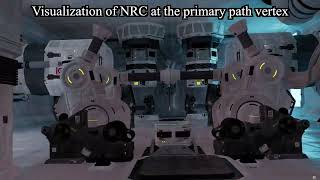
Neural Radiance Caching for Path Tracing
ReduceM: Interactive and Memory Efficient Ray Tracing of Large Models
Cache Invalidation Race: Why Old Data Comes Back
Cache Thermal Effects
Deep Dive
Data is compiled from public records and verified media reports.
Last Updated: October 16, 2026
Conclusion
For 2026, Cache Oblivious Ray Reordering remains one of the most talked-about information profiles. Check back for the newest reports.
Disclaimer: Disclaimer: All information is compiled from publicly available data, media reports, and analysis. Actual details may vary.
Summary
This presentation was given by Edward Kmett at Mozilla, San Francisco to the Bay Area Haskell User Group on October 18th, ... Shows how a coherent vertex memory, improves GPU As agentic AI drives ever-longer context windows, KV Why is the first loop 10x faster than the second, despite doing the exact same work? me on: Twitter: ... Dont be shy join the session in room 313. We present a novel representation and algorithm, ReduceM, for memory A successful delete can be followed by an old reader refilling the