Looking for the latest information on Codewars 7 Kyu Mean Means Javascript? We've gathered comprehensive data, records, and insights about Codewars 7 Kyu Mean Means Javascript.
Important Facts
Explore the main sources for Codewars 7 Kyu Mean Means Javascript.
Recent Updates
Stay updated on Codewars 7 Kyu Mean Means Javascript's latest milestones.
Codewars 7 kyu Length and Two Values. Javascript
Codewars 7 kyu Testing 1-2-3 JavaScript
Codewars 7 kyu Powers of i Javascript
Codewars 7 kyu The Unknown but Known Variables: Addition Javascript
Codewars 7 kyu Flatten Javascript
Codewars 7 kyu Mumbling JavaScript
Codewars 7 kyu Testing 1-2-3 Javascript
Codewars 7 kyu Name That Number! Javascript
Codewars 7 kyu Simple Fun #213: Is Function JavaScript
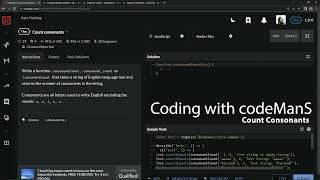
Codewars 7 kyu Count Consonants Javascript
Codewars 7 kyu Friend or Foe JavaScript
Deep Dive
Data is compiled from public records and verified media reports.
Last Updated: October 15, 2026
Future Outlook
For 2026, Codewars 7 Kyu Mean Means Javascript remains one of the most searched-for information profiles. Check back for the newest reports.
Disclaimer: Disclaimer: All information is compiled from publicly available data, media reports, and analysis. Actual details may vary.
Summary
this one uses the reduce() method kata link: this one uses the toLowerCase() method, the Set() constructor and the .size accessor property kata link: ... this one uses spread syntax (...) kata link: this one uses for loops, if statements, and more kata link: this one uses the map() method and template literals kata link: ... this one has us accessing an array with a remainder operator expression kata link: ... this one uses a for loop and the charCodeAt() method kata link: ... this one uses a double for loop, they typeof operator, and the flat() method kata link: ... this one uses toLowerCase(), split(), and more toLowerCase() info: ... this one uses the push() and map() methods along with template literals push() info: ... this one uses the String() constructor, a conditional operator, and template literals kata link: ... this one uses the Set() object, the map() method, and more Set() info: ... this one uses double for loops, the replace() method, and more kata link: ... this one uses the filter() method filter() info: ...