Looking for the latest information on Coding The Quantum Oscillator? We've compiled comprehensive data, records, and insights about Coding The Quantum Oscillator.
Key Details
Explore the main sources for Coding The Quantum Oscillator.
History
Stay updated on Coding The Quantum Oscillator's latest milestones.
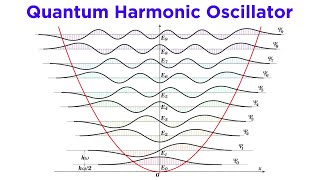
Solving the quantum harmonic oscillator via analytic method (Made Easy)
The 3D quantum harmonic oscillator
The only equation in physics (Harmonic Oscillator)
Solving the Quantum Harmonic Oscillator using the Algebraic Method (Ladder Operators)
Lecture-8:Wavefunction of Harmonic Oscillator and Caparison between Classical and Quantum Oscillator
The Quantum Harmonic Oscillator Part 2: Solving the Schrödinger Equation
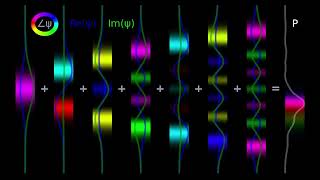
Quantum harmonic oscillator via ladder operators
Matlab code for Quantum Harmonic Oscillator
16. Superconducting Qubits I: Quantizing a Harmonic Oscillator, Josephson Junctions - Part 1
Intro to the Quantum Harmonic Oscillator in 9 Minutes #PaCE1
Solving the Schrodinger Equation | The Harmonic Oscillator (Ladder Operators)
Detailed Analysis
Data is compiled from public records and verified media reports.
Last Updated: October 16, 2026
Conclusion
For 2026, Coding The Quantum Oscillator remains one of the most searched-for information profiles. Check back for the latest updates.
Disclaimer: Disclaimer: All information is compiled from publicly available data, media reports, and analysis. Actual details may vary.
Summary
numerical approach to solving the Why does everything in the universe eventually stop moving? It turns out, almost all of physics is just a simple ball in a valley. Unit-2 :Schrodinger Equation and its Application : Regarding your internal marks: All students to note that, the first unit of our ... We just introduced the classical harmonic Lecturer: Zlatko Minev, PhD Lecture Notes and Labs: qiskit.org/learn/intro-qc-qh This course is an introduction to the ... A brief conceptual overview of the In this videos we use two nice ladder operators to solve the time-independent Schrodinger equation and find the stationary states.