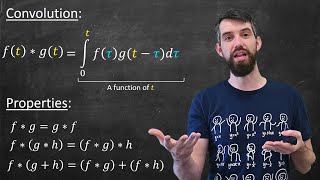
Convolutions | Why X+Y in probability is a beautiful mess
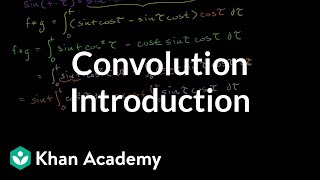
Introduction to the convolution | Laplace transform | Differential Equations | Khan Academy
Convolution Theorem | Image Processing II
inverse laplace of s/(s^2+1)^2, using convolution theorem
Convolution Theorem: Fourier Transforms
How to use the Convolution Theorem to Find the Laplace Transform (Easy Definite Integral Example)
13. Convolution Theorem Problems : Part 1 : 21MAB102T
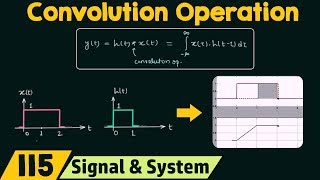
Introduction to Convolution Operation
Expert Insights
Data is compiled from public records and verified media reports.
Last Updated: October 19, 2026
Future Outlook
For 2026, Convolution Theorem remains one of the most talked-about information profiles. Check back for the newest reports.
Disclaimer: Disclaimer: All information is compiled from publicly available data, media reports, and analysis. Actual details may vary.
Summary
Courses on Khan Academy are always 100% free. Start practicing—and saving your progress—now: ... We can add two functions or multiply two functions pointwise. However, the Explains a 5-Step approach to evaluating the In this lesson, I introduce the Adding random variables, with connections to the central limit First Principles of Computer Vision is a lecture series presented by Shree Nayar who is faculty in the Computer Science ... inverse laplace of s/(s^2+1)^2 using Free ebook bookboon.com/en/partial-differential-equations-ebook Statement and proof of the Signal and System: Introduction to