Looking for the latest information on Electrostatic Pull In Animation? We've compiled comprehensive data, records, and insights about Electrostatic Pull In Animation.
Key Details
Explore the main sources for Electrostatic Pull In Animation.
Latest News
Stay updated on Electrostatic Pull In Animation's newest achievements.
interactive animation on charging two sphere system by induction.
Electrostatic Comb-drive Micro-actuator based on C-DP-DP Flexure
Electrostatic Actuation Proof of Concept
Electrostatic Precipitators
Why Power Plants Use Electrostatic Precipitators. Animated 3D Explanation of Gas-Particle Separation
Bidirectional Electrostatic Actuators for a Crawling Milli-Robot
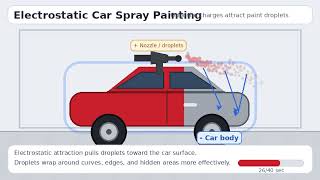
Electrostatic Painting Process #Physics #Electrostatics #CarPainting #Science #electriccharges
Electrostatic Precipitator
The science of static electricity - Anuradha Bhagwat
Expert Insights
Data is compiled from public records and verified media reports.
Last Updated: October 22, 2026
Future Outlook
For 2026, Electrostatic Pull In Animation remains one of the most talked-about information profiles. Check back for the newest reports.
Disclaimer: Disclaimer: All information is compiled from publicly available data, media reports, and analysis. Actual details may vary.
Summary
MicroElectroMechanical System (MEMS) manufactured using Silicon-On-Insulator (SOI) technology. The device is actuated using ... Here is the simple and complete Ever wondered how massive power plants keep their smoke emissions clean? In this video, we dive deep into the fascinating ... A small ~1mm diameter mylar tube rolls across a flat row of electrodes. By putting a voltage across the electrodes (~500V), ... Visit goo.gl/z1BWNj to view the full video and purchase access to our other Pulping courses. Many industrial processes, ... How do power plants remove toxic dust and particles from smoke before it reaches the atmosphere? In this 3D "Bidirectional, Thin-Film Repulsive-/Attractive-Force AASOKA presents a video in which students can learn about View full lesson: ed.ted.com/lessons/the-science-of-