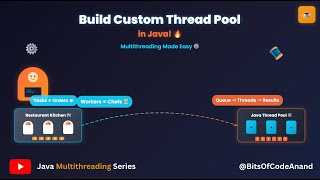
Introduction to How To Create Own Thread Pool In Java
Looking for the latest information on How To Create Own Thread Pool In Java? We've compiled comprehensive data, records, and insights about How To Create Own Thread Pool In Java.
Main Features
Explore the key sources for How To Create Own Thread Pool In Java.
Developments
Stay updated on How To Create Own Thread Pool In Java's latest milestones.
#18 ExecutorService Internals Part 4: The 7 Constructor Parameters of ThreadPoolExecutor Explained
Master the Art of Writing a Thread Pool in Java
How Thread Pool Work in Java | Multithreading
How to create custom thread pool in Java
Thread Pool Examples | 2022 | Java Part -65
Java Thread Pool Explained in 4 Minutes! | Thread Pools for Begineers 🔥
Java Thread Pool Explained | How to Create & Use Thread Pools Efficiently | Java | Multithreading
Java Thread Pool: How to Build Your Own ExecutorService
Design a Fixed Size Thread Pool in Java | Concurrency LLD Interview
How to create a ThreadPool from scratch
Deep Dive
Data is compiled from public records and verified media reports.
Last Updated: October 16, 2026
Conclusion
For 2026, How To Create Own Thread Pool In Java remains one of the most talked-about information profiles. Check back for the newest reports.
Disclaimer: Disclaimer: All information is compiled from publicly available data, media reports, and analysis. Actual details may vary.
Summary
Welcome back to the Multithreading in In this video, we'll go deep into Welcome back to our **Multithreading in Discover essential resources and strategies for writing a How to create custom thread pool in Java Thread Pool Java Thread Pool create Call / DM me: topmate.io/engineeringdigest Donate: razorpay.me/ Perks: ... What's really happening inside Executors.newFixedThreadPool(10)? In this episode we Notes link: Shared in the Member Community Post (If you are Member of this channel, then pls check the Member community post, ... If you're preparing for Low Level System Design interviews, there's one concurrency question that appears again and again: ... Let's assume we have to design a