Looking for the latest information on Maple Lecture 4? We've researched comprehensive data, records, and insights about Maple Lecture 4.
Core Information
Explore the main sources for Maple Lecture 4.
Recent Updates
Stay updated on Maple Lecture 4's latest milestones.
Lecture 4: Loops over Strings, Guess-and-Check, and Binary
Maple - Lesson 4
Lecture 4 - Perceptron & Generalized Linear Model | Stanford CS229: Machine Learning (Autumn 2018)
Lecture 4 - Building Product, Talking to Users, and Growing (Adora Cheung)
CS50P - Lecture 4 - Libraries
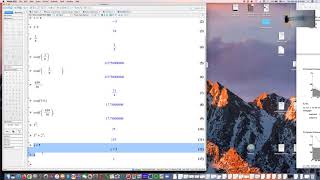
Lecture 4 - Maple for linear programming
Stanford CS336 Language Modeling from Scratch | Spring 2026 | Lecture 4: Attention Alternatives
Stanford CS231N | Spring 2025 | Lecture 4: Neural Networks and Backpropagation
Stanford CS336 Language Modeling from Scratch | Spring 2025 | Lecture 4: Mixture of experts
Building makemore Part 4: Becoming a Backprop Ninja
Maple Leaf Rag - Piano Adventures Level 4 Lesson Book
Detailed Analysis
Data is compiled from public records and verified media reports.
Last Updated: October 19, 2026
Final Thoughts
For 2026, Maple Lecture 4 remains one of the most searched-for information profiles. Check back for the latest updates.
Disclaimer: Disclaimer: All information is compiled from publicly available data, media reports, and analysis. Actual details may vary.
Summary
For more information about Stanford's graduate programs, visit: online.stanford.edu/graduate-education October 17, 2025 ... Assista a esta palestra em português em youtu.be/DweS4KseeDE, graças ao lingopal.ai. Mira esta conferencia en español ... MIT 6.100L Introduction to CS and Programming using Python, Fall 2022 Instructor: Ana Bell View the complete course: ... This is CS50P, CS50's Introduction to Programming with Python. Enroll for free at cs50.edx.org/python. Slides, source code ... 339 divided by 36. aha that turns out to be 71 over XCS231N Deep Learning for Computer Vision, the professional education version of the graduate course CS231N Deep ... We take the 2-layer MLP (with BatchNorm) from the previous video and backpropagate through it manually without using PyTorch ...