Introduction on Permutations As Ordered Selections
Looking for the latest information on Permutations As Ordered Selections? We've compiled comprehensive data, records, and insights about Permutations As Ordered Selections.
Important Facts
Explore the primary sources for Permutations As Ordered Selections.
History
Stay updated on Permutations As Ordered Selections's latest milestones.
Combinations (order doesn't matter) and permutations (order does matter)
How to use nPr - Permutations (ordered Combinations)
Permutations vs Combinations: When Does Order Matter
Permutations | HSC Extension 1 Mathematics
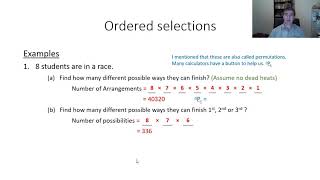
Ordered Selections (3 of 3: Considering conditions)
Permutations & Combinations: Non-consecutive selection in a row n-r+1Cr Formula proof with example
Permutations Explained Visually - Where Does nPr Come From | Permutation & Combination Ep. 6
Permutations & Combinations Explained | Does Order Matter
Unordered Selections (1 of 3: Relation to permutations)
Detailed Analysis
Data is compiled from public records and verified media reports.
Last Updated: October 21, 2026
Conclusion
For 2026, Permutations As Ordered Selections remains one of the most searched-for information profiles. Check back for the newest reports.
Disclaimer: Disclaimer: All information is compiled from publicly available data, media reports, and analysis. Actual details may vary.
Summary
... working out probabilities of different things okay and there's a whole bunch of important things just about YNOT visit ynotmath.com.au for more YNOT? YNOT to watch and learn math? YNOT on Instagram to ... Learn how to count! In this video, you will learn: • what is an ... 10 possible combinations because VISIT MATHORMATHS.COM FOR MORE THIS! me on twitter.com/mathormaths, and ... Today we answer the big questions "what if my 5 friends wanted to stand in a row?" or "what if I had 5 friends?". More resources available at misterwootube.com. Determining the number of possibilities for Multi-Stage events when the What does nPr actually mean, and where does the Learn how to choose the correct counting method by answering two simple questions: does