Looking for the latest information on Resumability Explained Briefly? We've gathered comprehensive data, records, and insights about Resumability Explained Briefly.
Main Features
Explore the primary sources for Resumability Explained Briefly.
Developments
Stay updated on Resumability Explained Briefly's latest milestones.
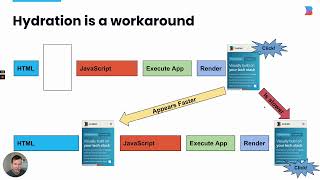
Qwik Crash Course (first look) #1 - Hydration vs Resumability
Resumability in the next generation frontend framework With O(1) loading time by Ruby Jane Cabagnot
Resumability in the next generation frontend framework With O(1) loading time by Ruby Jane Cabagnot
Resumable Applications
Islands Architecture | Explained Briefly
Hydration Explained
Hydration and Resumability in SSR
React Server Components | Explained Briefly
What is Hydration
Client-Side Rendering | Explained Briefly
Full Guide
Data is compiled from public records and verified media reports.
Last Updated: October 14, 2026
Conclusion
For 2026, Resumability Explained Briefly remains one of the most talked-about information profiles. Check back for the latest updates.
Disclaimer: Disclaimer: All information is compiled from publicly available data, media reports, and analysis. Actual details may vary.
Summary
Hydration is the process of taking a pre-rendered HTML page sent to the client and making it interactive by attaching event ... Progressive Hydration is the process of *hydrating a server-rendered page over time*, instead of hydrating everything at once ... Qwik is a JavaScript framework that uses a new rendering paradigm called Qwik applications can be paused at any time and moved to a different VM where they can continue their execution. Because the ... Islands Architecture is a method of achieving Partial Hydration (hydrate only parts of page), by creating *separate islands of ... I hope now you guys have a basic idea of what is hydration and React Server Components (RSC) are React components that are *fetched and rendered on the server* whereas client (regular) ... Hydration in web development is the process of making server-rendered HTML interactive on the client-side. After a server sends ... Client-Side Rendering (CSR) is the process of rendering *only a barebones HTML page on the server* with the complete page ...