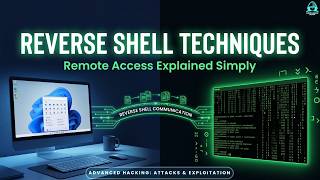
Looking for the latest information on Reverse Tcp Shell Authentication? We've compiled comprehensive data, records, and insights about Reverse Tcp Shell Authentication.
Core Information
Explore the main sources for Reverse Tcp Shell Authentication.
Latest News
Stay updated on Reverse Tcp Shell Authentication's latest milestones.
MSVENOM Reverse TCP SHELL Exploit
Reverse TCP Shell Process Injection /w Elastic Defend
Reverse TCP Shell using an evil PDF
Remotely Control PCs with Reverse Shells! Easy hacker tool
This Reverse Shell Is Unlike Anything I've Seen
Reverse TCP shell with authentication for Linux ARM Raspberry Pi 1
Exploiting a machine using a TCP reverse shell with msfvenom
From URL Parameter to Root Shell — Command Injection & Reverse Shells | AquaGate Security Series
Reverse Shell Explained: How Attackers Gain Remote Access & How to Detect It
Deep Dive
Data is compiled from public records and verified media reports.
Last Updated: October 25, 2026
Conclusion
For 2026, Reverse Tcp Shell Authentication remains one of the most talked-about information profiles. Check back for the newest reports.
Disclaimer: Disclaimer: All information is compiled from publicly available data, media reports, and analysis. Actual details may vary.
Summary
Testing my custom implementation for a In this video I give a demonstration of how Protect your grandma from RATS: bit.ly/bdnetworkchuck (try Bitdefender for FREE for 120 days) Links and Guide: ... Process injection observed in the free tier of Elastic Defend, injecting Membership // Want to learn all about cyber-security and become an ethical hacker? Join this channel now to gain access into ... More at: medium.com/syscall59 twitter.com/syscall59 github.com/alanvivona/pwnshop. Today's video is on exploiting a machine via a In this video I will explain in simple terms, what a POC: Remote Code Execution It is vulnerable to unauthorized remote code execution. To reproduce the issue, access the settings ... We exploit V4 in AquaGate: a command injection vulnerability caused by passing user input to subprocess with Ever wondered how attackers take control of a system remotely without ever being physically present? In this video from Bluehat ...